Project 2025, One Ordinary Change at a Time
More than half of the agenda is already underway. The bigger question is whether Americans still recognize what implementation looks like.
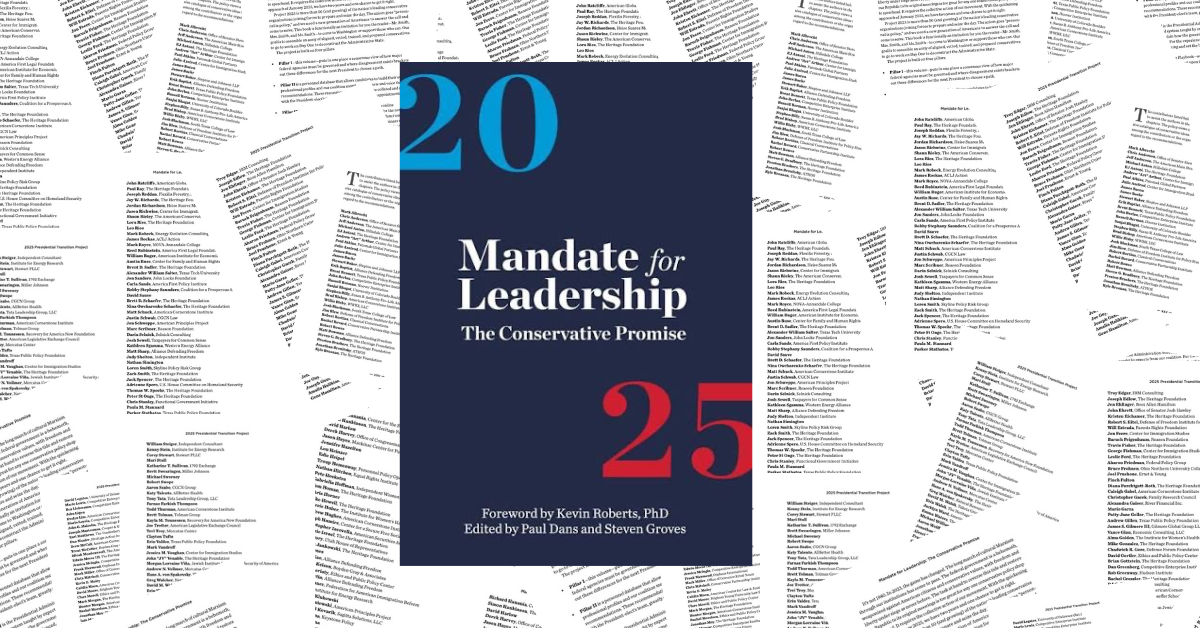
We spent the latter half of the 2024 election arguing about Project 2025 as if it were hypothetical.
Would Donald Trump actually implement it?
Was it really his agenda?
How much of it could a president realistically accomplish?
Those questions are obsolete now.
The more important question now is: How much can change before Americans stop noticing that it changed at all?
In February 2026, the Center for Progressive Reform and Governing for Impact reported that the Trump administration had initiated or completed 283 of the 532 domestic administrative actions they identified and tracked from Project 2025 — 53 percent — during the first year of Trump’s second term. Their tracker monitors actions across 20 federal agencies.
Then, in June, the Heritage Foundation began using that exact percentage.
According to Bloomberg Law, Heritage told supporters that the Trump administration had implemented 53 percent of Project 2025’s policy recommendations, citing actions such as the dismantling of USAID and the complete elimination of federal diversity, equity, and inclusion initiatives. Heritage then called for the implementation of the remainder.
The two organizations are not using identical methodologies, and their numbers should not be treated as interchangeable measurements. But that almost makes the moment more remarkable.
Critics of Project 2025 say more than half of the domestic administrative agenda they track is underway.
Heritage says more than half of its recommendations have been adopted.
We are well past arguing about whether Project 2025 matters.
It matters.
The question now is: Do Americans recognize what implementation actually looks like?
One of the biggest mistakes we made when discussing Project 2025 was assuming its implementation would be a single event.
We assumed something would happen, or Congress would pass some enormous piece of legislation. Or Trump would sign a bill with an appropriately dystopian name.
We thought we’d know.
But that’s not how administrative power works.
Project 2025 was built precisely because governing is more complicated than winning an election and passing legislation. Heritage described the project as having four components:
A policy agenda
Personnel recruitment
Training for future administration officials
A 180-day implementation playbook.
Heritage was remarkably explicit about its purpose.
Project director Paul Dans said the goal was to assemble an “army of aligned, vetted, trained, and prepared conservatives” ready to begin dismantling the administrative state on Day One.
Its Presidential Administration Academy wasn't just ideological education. Heritage described training future officials in executive-order drafting, federal grants and contracts, Cabinet government, and the practical mechanics of exercising executive power.
Project 2025 is an implementation system. And implementation systems are boring as hell. That’s actually part of what makes them powerful.
A regulation changes.
An office closes.
A definition gets rewritten.
Grant requirements change.
A website disappears.
A civil-service classification gets replaced.
An agency loses half its staff.
Another executive order drops.
Then another.
And another.
No single moment necessarily feels large enough to stop normal life for.
So we absorb it.
And the thing after that.
And the thing after that.
June 3 is a good example.
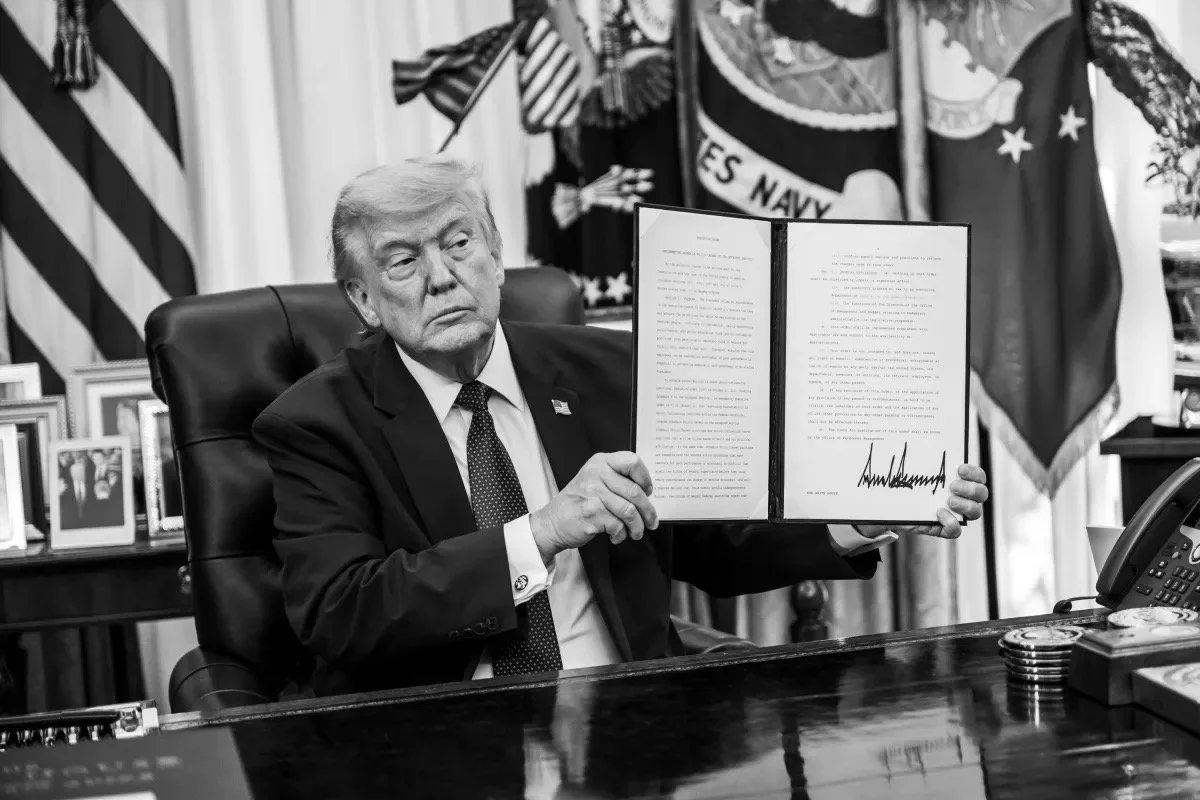
President Donald Trump signs executive orders in the Oval Office on June 3, 2026. | Official White House Photo by Molly Riley
Trump signed Executive Order 14410, implementing a new federal employment category called Schedule Policy/Career.
The administration says roughly 8,000 career federal jobs will fall under it.
Those employees are still career civil servants. Hiring is still supposed to be merit-based. But they will have fewer of the procedural protections traditionally given to career civil servants — making it easier for agencies to fire them.
That is the part that matters.
The White House describes them as effectively at-will positions and says agencies can more readily remove employees for poor performance, misconduct or failure to carry out presidential directives.
The Office of Personnel Management finalized the underlying rule in February. OPM says Schedule Policy/Career covers career employees whose jobs are confidential, policy-determining, policymaking or policy-advocating.
This did not come out of nowhere.
Project 2025 devoted enormous attention to presidential control over the federal bureaucracy because its architects understood something fundamental:
Policy is only as powerful as the machinery available to implement it.
A president can issue directives.
But somebody still has to turn those directives into an actual functioning government.
That is the career civil service.
They interpret regulations. Administer programs. Review applications. Enforce laws. Manage grants. Conduct investigations. Maintain institutional knowledge that survives from one administration to another.
Change the relationship between those workers and presidential power, and you change more than a personnel policy.
You change the machinery.
That is why the parts of Project 2025 dealing with the machinery of government deserve far more attention than they have received.
A headline about 8,000 federal jobs changing classification may not generate the same outrage as a spectacular political scandal.
But structural changes are precisely the ones that can make hundreds of later policy changes easier.
The Department of Education provides another example of incremental implementation.
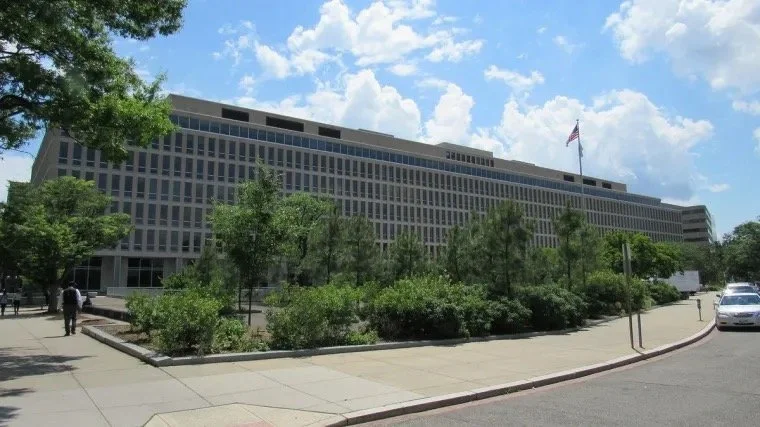
Lyndon Baines Johnson Department of Education Building | U.S. Department of Education
Project 2025 called for the department's elimination.
Trump has not accomplished that legislatively. Congress created the department, and a president cannot simply erase it alone.
But “not accomplished” does not mean “nothing happened.”
On March 11, 2025, the Department of Education announced a reduction in force affecting nearly 50 percent of its workforce. The department said staffing would fall from 4,133 employees at the beginning of Trump's term to roughly 2,183.
Half.
Nine days later, Trump signed an executive order instructing Education Secretary Linda McMahon to take steps, to the maximum extent permitted by law, to facilitate the department's closure and return education authority to states and local communities.
McMahon openly described the administration as working toward returning education functions to the states while continuing programs required by law.
There were lawsuits. There were injunctions. There were appeals. The Supreme Court eventually allowed the administration to proceed with the reduction in force while litigation continued.
So has Project 2025's proposal to eliminate the Department of Education been “implemented”?
Not completely.
Has nothing happened because Congress has not formally abolished the department?
Obviously not.
And that gap — between fully completed and nothing to see here — is where a tremendous amount of Project 2025 is currently operating.
There is something psychological buried inside all of this.
Human beings adapt. We have to.
If every extraordinary event continued to feel extraordinary forever, none of us could function.
But that adaptability can be dangerous in politics because institutional change can become normalized long before its consequences are fully understood.
Think about how much language we have already learned to treat as ordinary.
DOGE.
Agency reductions in force.
Mass federal layoffs.
Schedule Policy/Career.
Department elimination.
Federal funding freezes.
Executive orders restructuring entire areas of government.
The first time you hear something unprecedented, you stop.
The tenth time, you scroll.
That is incremental normalization.
It does not require a secret meeting.
It does not even require that anyone consciously design public exhaustion.
It simply requires enough consequential changes, occurring quickly enough and separately enough, that the public begins processing extraordinary institutional change as routine political news.
Monday: another executive order.
Tuesday: another lawsuit.
Wednesday: another agency announcement.
Thursday: another court ruling.
Friday: another scandal entirely.
By the following Monday, the thing that would have dominated political conversation for weeks ten years ago is background information.
And the baseline has moved.
Again.
None of this means every Trump administration policy originated with Project 2025.
Conservatives have wanted to eliminate the Department of Education for decades. Expanding presidential control over the civil service did not begin with Heritage. Neither did conservative positions on immigration, DEI or deregulation.
That distinction matters.
Simply finding the same policy in Project 2025 and the Trump administration does not prove that Heritage caused it.
But Project 2025 was never just a list of conservative policy ideas.
That is what gets lost.
Heritage brought together more than 100 organizations. It built a personnel operation. It trained prospective appointees. It developed an implementation playbook.
It explicitly prepared people to walk into the federal government on Day One already knowing how to use what Heritage called the “gears of power.”
And now Heritage itself is publicly taking credit for how much has been implemented.
At this point, we don't have to keep arguing about whether Trump is “really following Project 2025.”
We can look.
At the policies.
The people.
The timelines.
The executive orders.
The agencies being dismantled, reorganized or redirected.
This is not a 2024 campaign argument anymore.
Project 2025 is still unfinished.
Some of it requires Congress. Some of it is tied up in court. Some proposals have stalled. Others may never happen.
But that does not mean the project has run its course.
Heritage certainly doesn't think it has.
In June, the organization celebrated what had already been implemented — and called for the administration to keep going.
And the next phase probably won't arrive with a banner announcing Project 2025: Phase Two.
It will look a lot like the first one.
A regulation.
A staffing decision.
A funding rule.
An executive order.
A court fight.
One at a time.
One more thing to absorb before the next thing happens.
Until eventually, the extraordinary stops feeling extraordinary.
That is where we are now.
Project 2025 is becoming ordinary.
