A 'Parenting Guide' on Moms.gov Is Hiding Something Bigger
What a two-page PDF's hidden data reveals about who's really behind it.
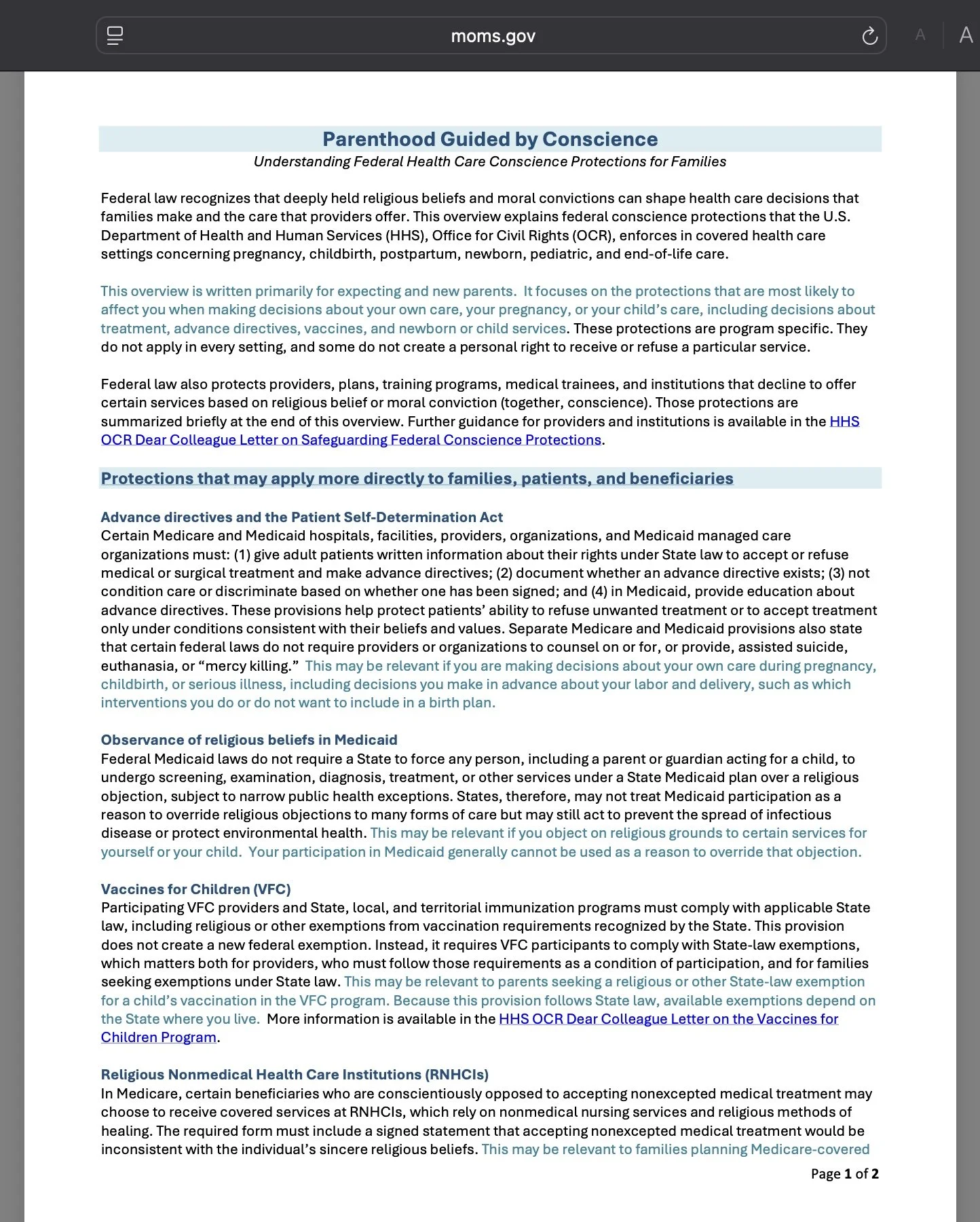
Moms.gov, the federal government's site for expecting and new parents, hosts the 'Parenthood Guided by Conscience' document at the center of this investigation.
There's a two-page PDF sitting quietly on moms.gov, the federal government's new site for expecting and new parents. It's titled "Parenthood Guided by Conscience." It reads like something a friendly HR department would hand you — plain language, reassuring tone, a list of your rights.
But pull back the file's own metadata — the invisible properties embedded in every PDF — and the document tells a different story than its friendly framing suggests. It was created inside the Department of Health and Human Services' Office for Civil Rights on May 5, 2026, at 2:40 p.m. Two days later, the head of that office and the director of HHS's Center for Faith co-published an op-ed making nearly identical arguments. And both moments sit inside a much larger, well-funded architecture — one that stretches from a Heritage Foundation policy shop to a new West Wing office to your own state's Title X clinic.
This is how that architecture works, traced document by document, name by name.
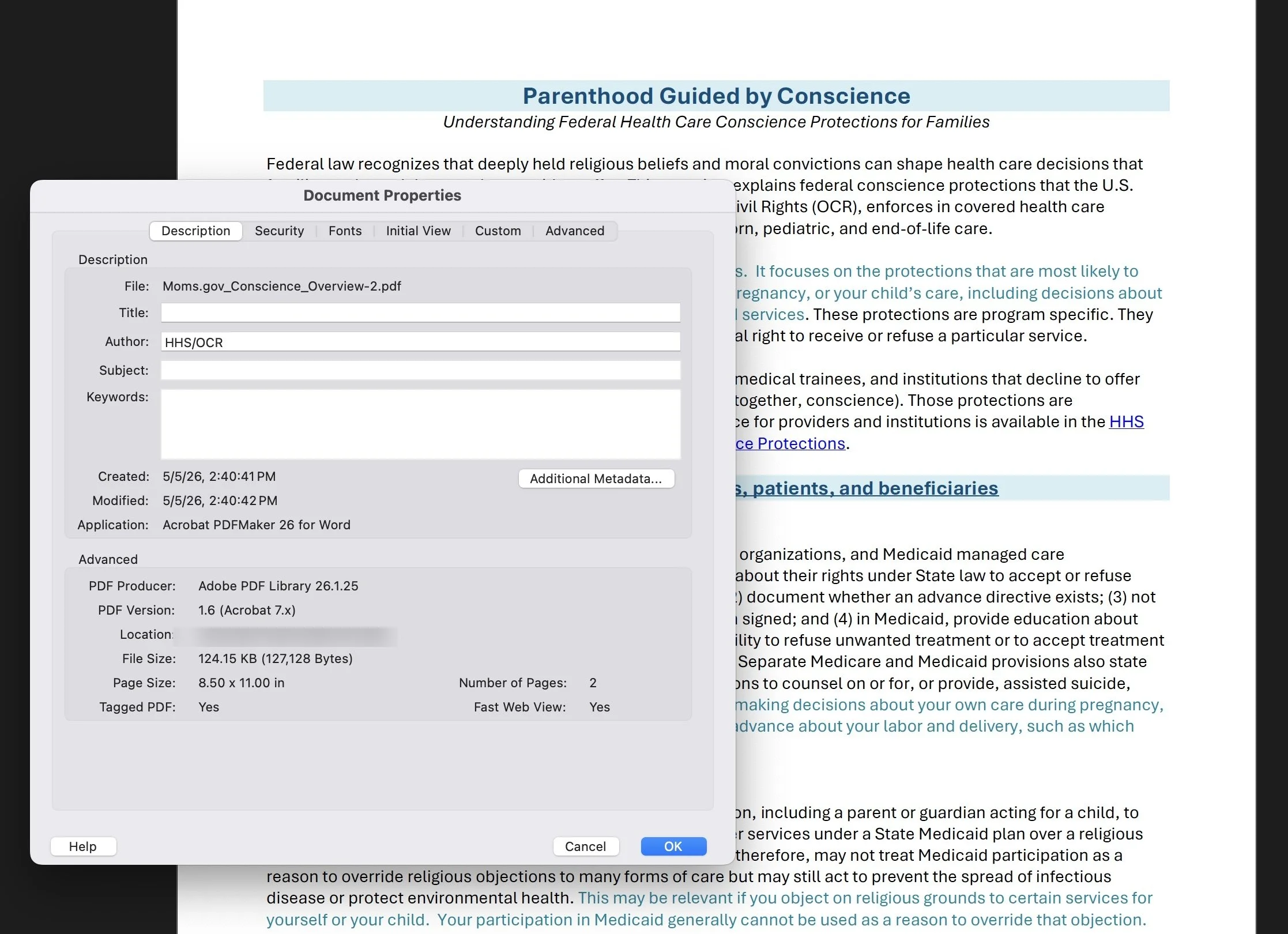
The PDF's own properties tell the story its text doesn't: Author, 'HHS/OCR.' Created May 5, 2026 — two days before HHS officials began publicly promoting its message.
What the document says
"Parenthood Guided by Conscience" walks expecting and new parents through federal "conscience protections" — the patchwork of laws that let patients, and separately providers, decline certain medical care on religious or moral grounds. Framed as informational, it covers:
• The right to refuse treatment via advance directives
• Religious exemptions from vaccination requirements under state law
• A parent's ability to decline youth suicide screening for their child on religious or moral grounds under the Garrett Lee Smith program
• CAPTA's carve-out, which does not require a state abuse/neglect finding when a parent relies on spiritual healing instead of medical treatment
• Provider-side protections (the Church Amendments, Coats-Snowe, Weldon Amendment) that let health care entities refuse to perform, refer for, or train in abortion without losing federal funding
Nothing in the document is legally new. Every statute it cites already existed. What's new is the packaging: a plain-language, parent-facing guide bundling all of it together, distributed through the same platform pushing the administration's baby-bonus savings accounts.
What the metadata shows
A review of the PDF's file properties — data embedded in the document itself, readable with any PDF tool — identifies the document's author as "HHS/OCR," created in Microsoft Word and exported via Adobe Acrobat on May 5, 2026. The file was never modified again after that export. Its content-type identifier shows it was managed through an internal HHS SharePoint library before publication.
That single fact resolves an open question: this document didn't originate with an outside advocacy group and get adopted by the agency. It was drafted inside the Office for Civil Rights itself.
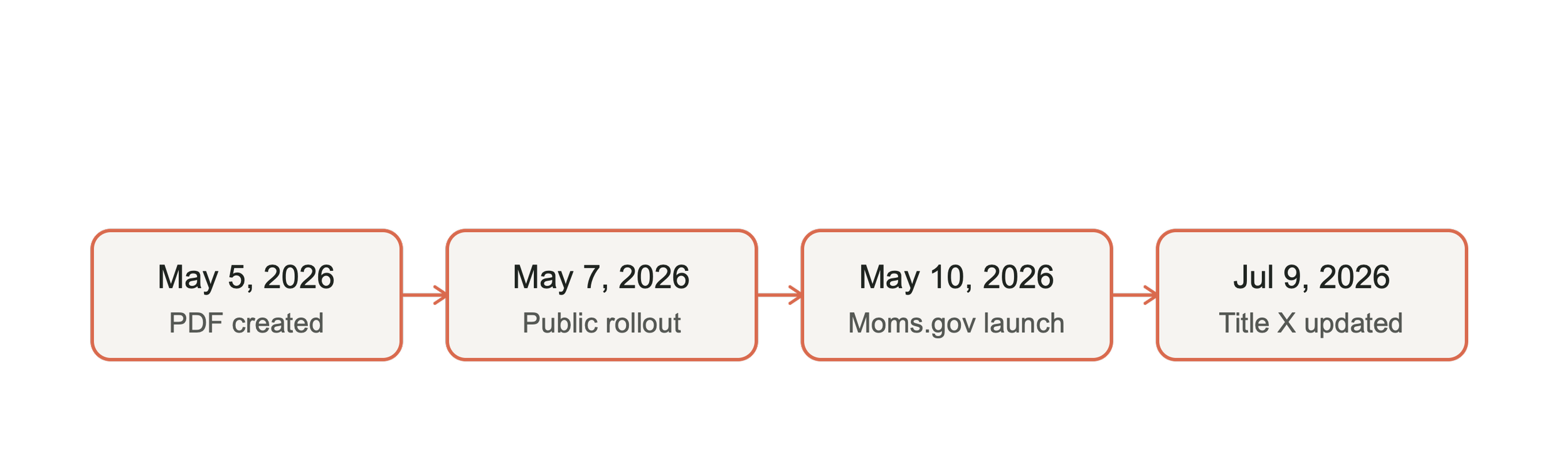
Sixty-five days, four milestones, one coordinated rollout.
The two-day gap
Two days after the document was created, Dr. Monty Burks — director of HHS's Center for Faith — and Paula Stannard — director of HHS's Office for Civil Rights — co-published an op-ed in The Daily Signal for National Day of Prayer. It framed houses of worship as "Trusted Messengers" for underserved communities and argued that federal conscience law lets "faith-filled Americans and organizations" serve without compromising their beliefs.
It is, functionally, the public rollout for a document finalized 48 hours earlier.
Stannard runs OCR, which the metadata identifies as the document's author. Burks runs the Faith Center, the office built to move faith-community messaging through HHS. Between them, they hold both halves of the pipeline: legal authorship and public distribution.
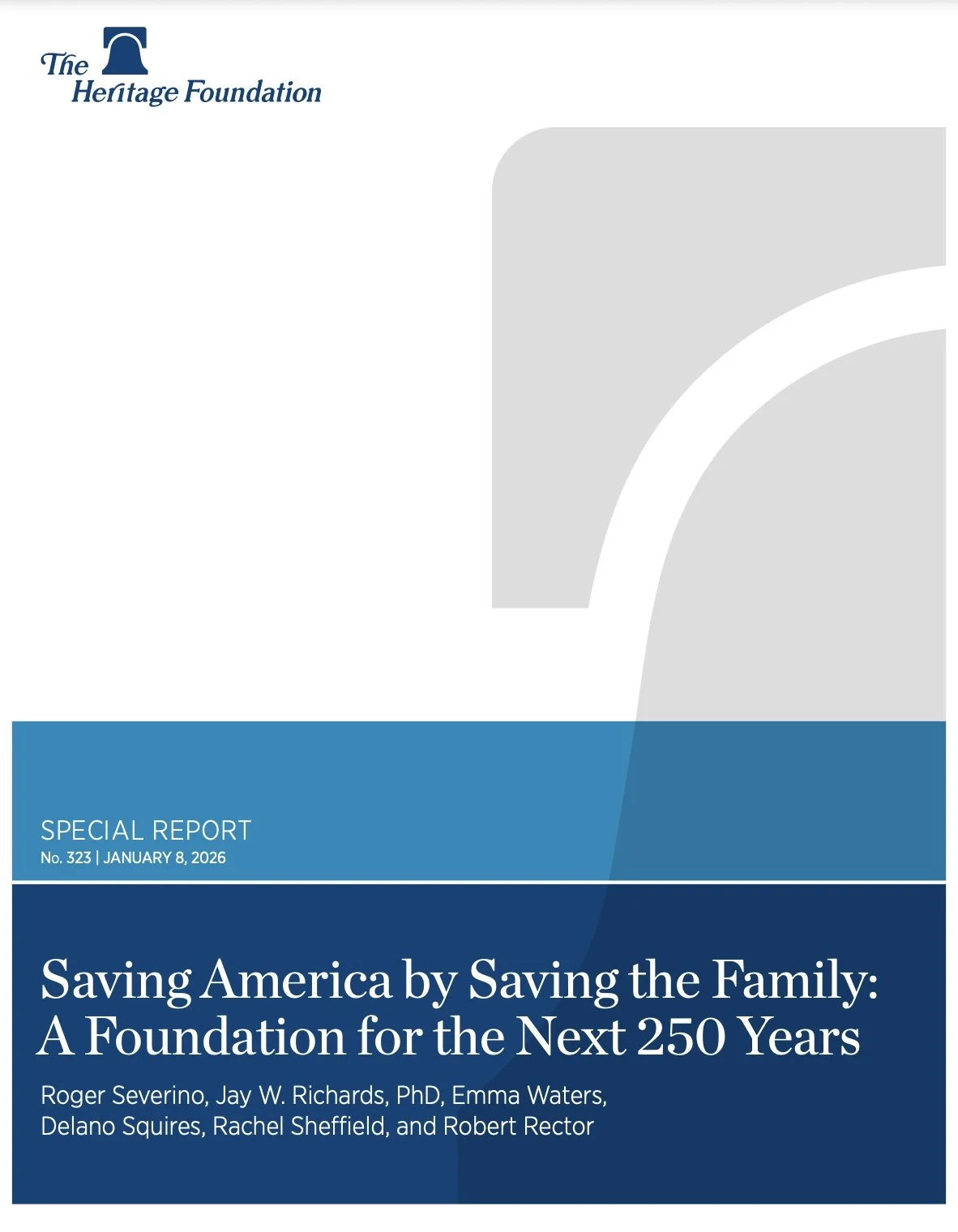
Special Report No. 323. One of its six co-authors, Emma Waters, has spent over a year building the exact ideological framework now surfacing at HHS.
The blueprint predates the document
None of this happened in a vacuum. In January 2025, Heritage Foundation policy analyst Emma Waters co-authored "A Future for the Family," a statement signed by Heritage president Kevin Roberts and a network spanning the Institute for Family Studies, the Ethics and Public Policy Center, and First Things. A year later, Waters co-authored Heritage's "Saving America by Saving the Family" — a 250-year framework that explicitly rejects subsidies for IVF, surrogacy, and artificial wombs, and calls for "protecting life from fertilization."
Waters's own words describe her work plainly: "My faith shapes everything I do." Her policy focus at Heritage is restorative reproductive medicine — a framework reproductive-rights researchers say functions as a soft on-ramp to embryonic personhood law, discouraging patients from IVF specifically to avoid creating "fertilized eggs."
The moms.gov document is not a copy of Heritage's language. But it's the same idea, translated into agency letterhead: conscience as the legal mechanism, faith as the delivery system.
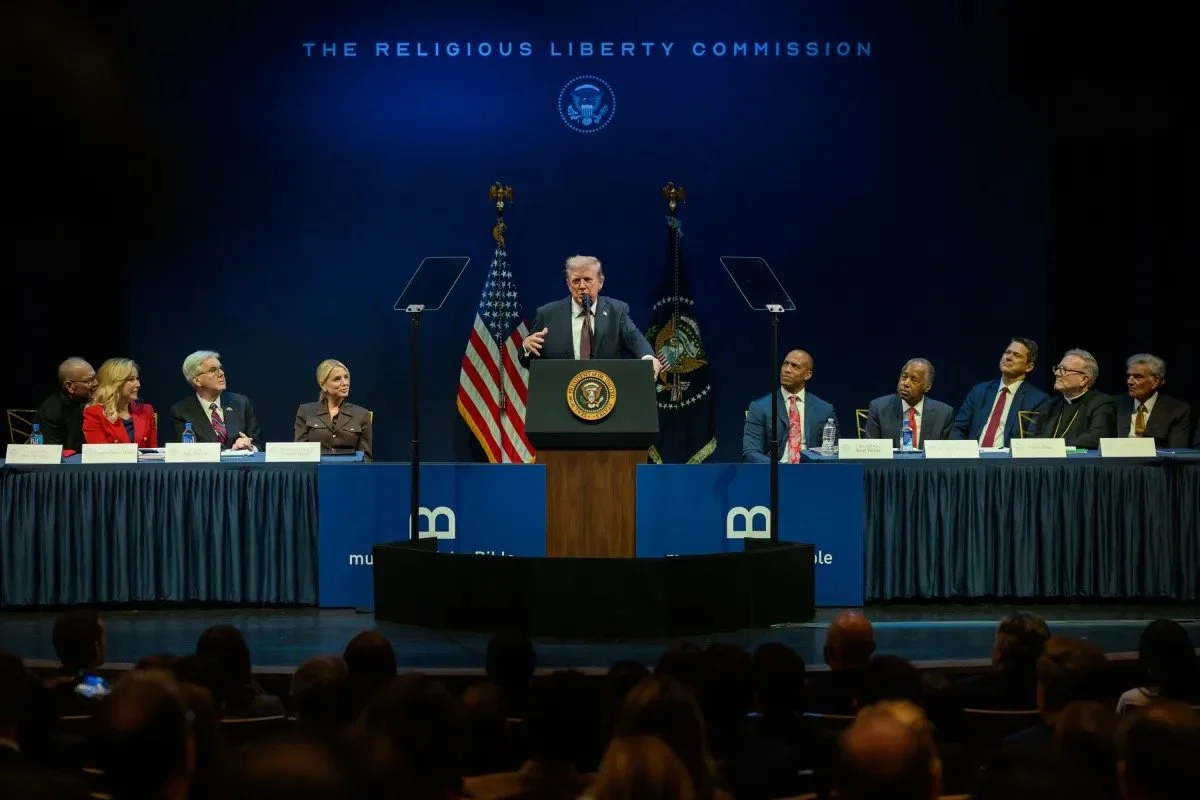
Trump addresses the Religious Liberty Commission's commissioners, seated on either side of the podium — the same body whose June 2026 draft report recommended expanding conscience objections in health care.
The scaffolding around it
The Faith Center isn't a one-off HHS quirk. It's one node in a government-wide network:
• The White House Faith Office, established February 2025, is the first West Wing office focused exclusively on faith, housed inside the Domestic Policy Council
• Every federal department now has a "Center for Faith" with a designated Faith Director or Liaison
• The Religious Liberty Commission, chaired by Texas Lt. Gov. Dan Patrick, published a draft report in June 2026 recommending expanded conscience objections in health care, universal school choice, and repeal of the Johnson Amendment — which would let churches endorse political candidates without losing tax-exempt status
• A separate Task Force to Eradicate Anti-Christian Bias supplies the grievance narrative that justifies all of it
This is the machinery that makes a two-page PDF possible — and replicable, agency by agency, indefinitely.
What's still unconfirmed
No individual staffer's name is attached to the document — "HHS/OCR" is an office-level designation, not a byline. Whether Stannard personally reviewed the language, or delegated drafting to career staff, isn't yet known. Something Doesn't Feel Right. contacted HHS's press office with detailed questions about the document's authorship and the timing of its release. As of publication, HHS has not responded.
