What They Sold Us
When Marketing Became Conditioning
Content warning: This article contains material that may be disturbing and is sexually graphic in nature. Reader discretion is advised.
We are uncovering more and more every day in the Epstein files. And while we do, we’re watching — in real time — what most survivors already know too well: what it means to be silenced, isolated, and unheard.
As a society, we have been conditioned to offer support only to the “perfect” survivor — the one who didn’t fight back, who isn’t struggling with addiction or mental health, who left after the first time, who wasn’t “asking for it,” who “knew better” than to wear that.
Even when abuse is undeniable, the first questions are still accusatory:
Why were you there?
Were you drinking?
Did you flirt?
Where were their parents?
The burden is placed on the victim — never the system, never the predator.
People fear what they don’t understand. And it becomes even harder to confront harm when that harm is so normalized, so woven into the fabric of our culture, that we stop recognizing it for what it is. We have made progress in sexual-assault advocacy. But progress is not the same as justice — and we are nowhere near finished.
There are thousands of survivors connected to Epstein’s trafficking network — thousands — and for nearly twenty years, they have come forward asking for accountability, for truth, for basic dignity. Instead, they have too often been met with skepticism, harassment, and a legal system that protects powerful men while failing the people they hurt.
Childhood Conditioning
I grew up in a small, rural town in Southwest Virginia — cattle fields, dairy farms, corn stretching for miles. It was the kind of place where a handful of wealthy families owned most of the land and power.
In sixth grade, a boy from one of those families asked me to be his girlfriend.
I felt lucky.
He was popular.
He played football.
I had already been subconsciously conditioned to want that kind of validation.
On Valentine’s Day, he brought one of those giant balloons to school — the kind with a teddy bear inside, wrapped in a big pink bow. I thought it was for me.
It wasn’t.
He gave it to another girl, broke up with me, and called me a name I still don’t fully understand. Later, he told me he broke up with me because I didn’t want to hold his hand in assembly.
And he was right — I didn’t. He asked. I said no.
I wasn’t taught consent. Most of us weren’t. Our mothers weren’t either.
It wasn’t the first time I knew I had done something that upset a boy, but it was the first time I realized it wasn’t just some of them — it was a lot of them.
Middle school became a revolving door of boyfriends and “love interests.” At the time, it felt normal. Looking back, it wasn’t.
We were raised with a script: graduate, marry young, have children, make a home.
I didn’t plan to follow it — but life has a way of pushing you down familiar paths. I was 17 when my son was born. 18 when I got married. 19 when my daughter was born. 24 when I divorced.
What We’re Actually Reckoning With
And now, years later, we’re processing something much bigger:
The world isn’t just run by powerful men.
It’s run by powerful men who profit from the sexualization of children while abusing children at the same time.
And that’s not a metaphor.
It’s documented.
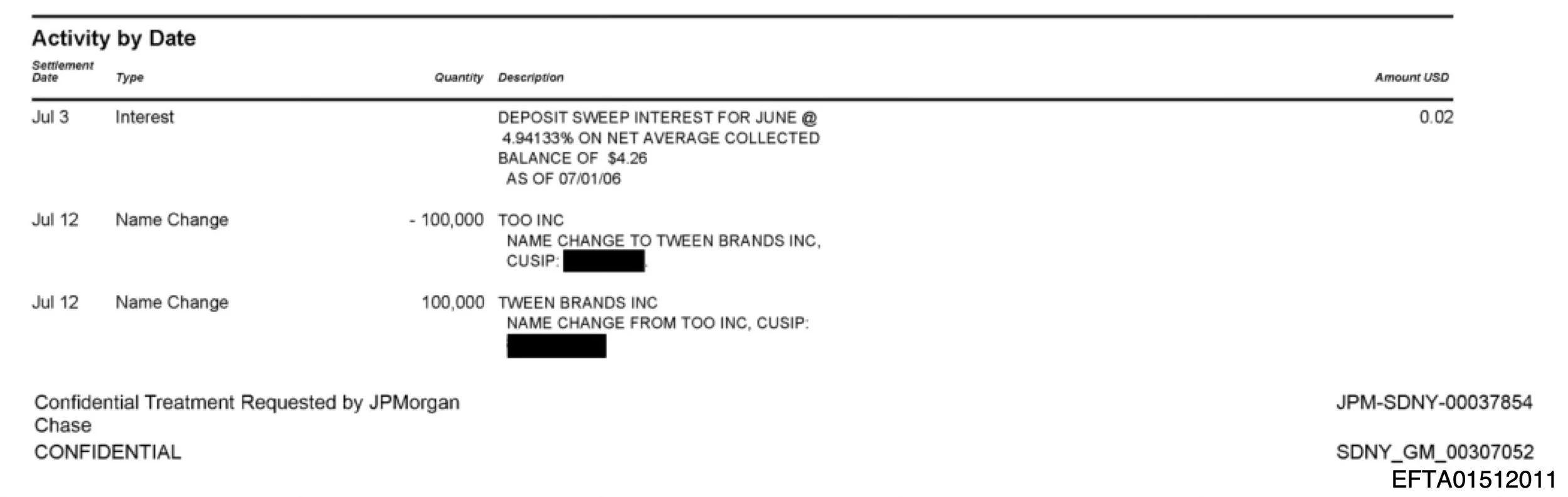
Epstein account activity showing the name change from Too, Inc. to Tween Brands, Inc.
Les Wexner built a retail empire that included brands many of us grew up wearing — Victoria’s Secret, PINK, The Limited, Limited Too, Express, Bath & Body Works, Abercrombie & Fitch. Before Epstein’s arrest, Wexner was known as “one of the most successful and respected entrepreneurs in the country.”
In a recently unredacted file released, following pressure from Rep. Thomas Massie, the FBI listed Les Wexner in a section identifying potential co-conspirators related to Epstein’s child sex-trafficking operation. However, even now, Wexner has maintained that he was unaware of Epstein’s sex crimes, but severed ties with him when he uncovered millions of dollars had been misappropriated.
Les Wexner, 88, is scheduled to sit for a deposition before several members of Congress this week, the first time Wexner has spoken under oath since the release of the Epstein files. He will no longer be able to deny the connections to Epstein after he claims to have cut ties.
Jeffrey Epstein is not the first predator to be linked to Wexner; Dr. Richard Strauss, a team doctor at The Ohio State University from 1978 to 1998, where he sexually assaulted at least 177 male students and athletes. Despite claiming innocence, Wexner has been implicated in victim testimony.
Complicating matters further, files show that Epstein held a significant stake in Too, Inc., the company behind Limited Too, Justice, and Brothers — brands marketed directly to tween girls and boys — even after Wexner claims to have cut ties with Epstein. This evidence is circumstantial at this stage. What it does establish, however, is continued financial overlap well after Epstein claimed ties had been severed.
These weren’t abstract investments.
These were the stores we shopped in.
The clothes we wore to school.
The training bras.
The butterfly clips.
The aspirational catalogs.

Epstein trust account holding over 361,000 shares of Tween Brands, valued at over $13.5 million.
While these men were trafficking and abusing minors, they were also shaping how minors dressed, how they were marketed, and how their bodies were packaged and sold.
It forces an uncomfortable question:
Who was deciding what little girls and boys should look like — and why do those same men show up again and again in the files?
The Fashion and Modeling Pipeline

Continued holdings of Tween Brands stock under Epstein-linked trust accounts.
Jean-Luc Brunel was the co-founder of Karin Paris and MC2 Modeling Agency (New York and Miami). His agencies supplied models to brands like Nordstrom, Macy’s, Saks Fifth Avenue, Neiman Marcus, and L Brands (Victoria’s Secret and The Limited). Brunel held an 85% stake in MC2.
Brunel lived up to his reputation — within the modeling industry, he was widely known for his preference for young girls and children, his drug use, and his relationship to Epstein. Despite being known for this, brands and agencies continued to work with him, including John Casablancas, the founder of ID Models. This knowledge did not result in professional exile — it resulted in continued access.
As the result of the investigation into Jeffrey Epstein, Brunel was arrested at Charles de Gaulle Airport in Paris, France in December 2019. In February 2022, Brunel was found hanged in his jail cell. His death foreclosed the possibility of public testimony.
Before the investigation, Epstein secured a $1 million line of credit for MC2. This financial backing further cemented Epstein’s position inside the modeling pipeline.
“He spent recent years recruiting girls in the former Soviet Republics and at schoolyards and volleyball courts in farming towns in the southernmost state of Brazil, home of supermodels Gisele Bündchen and Alessandra Ambrosio, whose fame turned the area into a hot spot for scouts.”
Bringing this full circle, it’s no surprise to find Donald Trump connected to both men through the modeling industry. Trump himself founded Trump Model Management and co-owned Miss Universe, Miss Teen USA, and Miss USA — organizations built on the recruitment, evaluation, and control of young women and girls.
This is not a full list of connections — these are the ones I’ve uncovered so far.
Paolo Zampolli is the founder of ID Models, and the current United States Special Representative for Global Partnerships for the Trump administration. Zampolli introduced Melania to Trump, and even arranged for her U.S. visa.
We’ve been told that Trump met Melania at the Kit Kat Club for a New York Fashion Week party in Manhattan that Zampolli was hosting, and what occurred immediately after that encounter — including subsequent travel and social overlap — remains unclear in the public record. However, the email below leads me to question to authenticity of those claims.
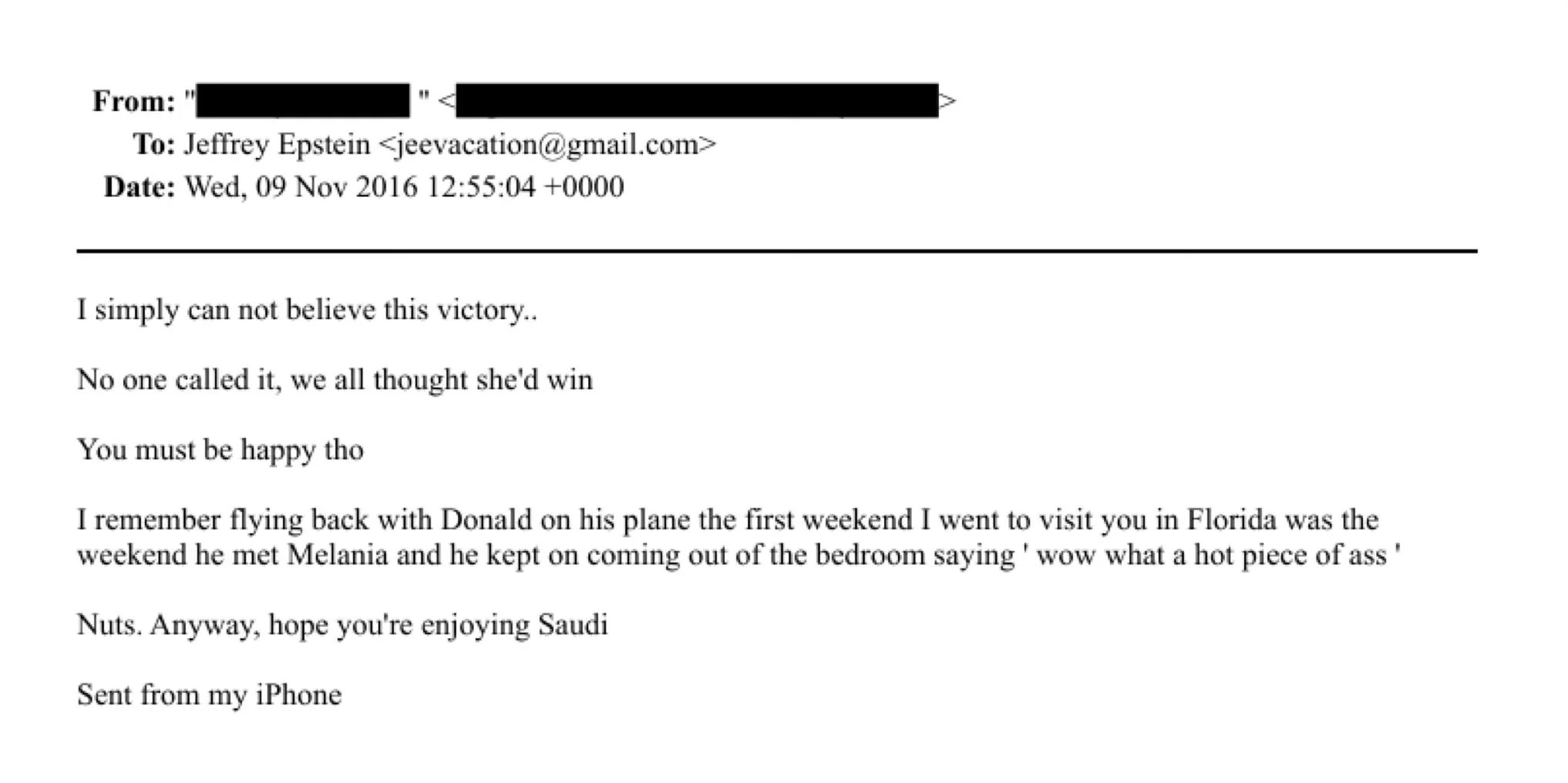
This email was sent to Jeffrey Epstein after the 2016 election. Read it carefully.
In the early 1990s, Trump even partnered with John Casablancas, an American model and talent agent whose documented behavior toward teenage models have been widely criticized, to elevate Look of the Year, a global competition created to scout teenage girls for Elite Model Management. Trump hosted the event at the Plaza Hotel, served as a judge, and became deeply embedded in Casablancas’s modeling empire — an industry built on access to young women and girls.
That access later became part of Trump’s public record.
In 1992, Donald Trump hosted the competition again onboard the Spirit of New York. “One of the girls on the boat was Shawna Lee, then a 14-year-old from a small town outside Toronto. She recalls how the contestants were encouraged to parade downstairs, one by one, and dance for Trump, Casablancas and others.”
During the same competition in 1992, on board the same ship, another contestant, who was 15 at the time, recalls being asked to walk for Trump and Casablancas.
Following her win as Miss Universe 1996, Trump publicly shamed Alicia Machado for gaining weight, referring to her as “Miss Piggy” and “Miss Housekeeping.” Several contestants from the 1997 Miss Teen USA pageant, some as young as 15, later alleged that Trump walked into their dressing room while they were naked or half-dressed. In a 2005 audio recording with Howard Stern, Trump himself admitted to entering contestants’ dressing rooms while they were changing, claiming his ownership gave him the right to “inspect” them.
Retail and banking ties overlapping with Epstein-linked financial structures.

Retail and banking ties overlap with Epstein-linked financial structures.
The files have not yet revealed the full extent of Epstein’s relationship with Wexner.
What is clear is this:
Through Wexner, Epstein gained access to money, to power, to industry, and to children.
The same agency machine that conditioned models was the same machine dressing children — subtly teaching them what to aspire to, what to tolerate, what their value was supposed to look like.
The files have revealed to us that Ed Razek, the long-time Chief Marketing Officer of L Brands, and Jeffrey Epstein had a long-standing relationship. Razek, who developed the Victoria’s Secret Angels and their annual fashion show, was the subject of many complaints of “inappropriate conduct.”

This email links Jeffrey Epstein to L Brands through a pseudo email address — the email has been redacted.
From approximately 1991 to 2007, Epstein was the personal financial advisor for Les Wexner — and Wexner granted him power of attorney, authorizing him to sign tax returns, hire people, and manage personal assets. For years, Wexner was described as Epstein’s primary — and for a period, his only known — client.
The DOJ has made an effort to redact Les Wexner’s name — and members of Congress have publicly challenged those redactions, specifically naming Wexner as one of the identities being concealed in some versions of the files. We don’t know exactly why the redactions are happening. But no one redacts names at scale “for fun” — redactions are a form of control: control of exposure, control of narrative, and control of who gets protected while the public stays in the dark. And the obvious question is: if his name appears even in the redacted material, how frequently does it appear in the unredacted record — and in what context?
So what advantage did Epstein have investing in Too, Inc. —> Tween Brands, Inc. —> Ascena Retail Group, Inc. on the NYSE?
Legitimacy — Holding large positions embeds you in mainstream finance. It makes you look like a conventional investor, not a predator building infrastructure.
Proximity — Public-company investing doesn’t give you “control,” but it can give you access: investor events, executive-adjacent circles, philanthropic overlaps, and the soft social permissions that come with being seen as “serious money.” Social capital is currency.
Flexibility — No one asks why you sold shares. Public markets let you move in and out quietly, convert equity to cash quickly, and reallocate without leaving the kind of messy paper trail private ownership can create.
Appearance — Retail looks harmless. It’s “safe” money: consumer brands, nostalgia, mall culture. That’s camouflage.
Obscurity — Investments can be held through trusts and custodians, which can obscure beneficial ownership and create distance between the person and the asset—especially when combined with layered entities.
Presence — Large shareholders can gain access to executives and attend investor events. Not because they’re “running” the business—because money buys rooms. And rooms buy silence.
Wexner stepped down from leadership at L Brands effective May 14, 2020.

Justice / Tween Brands successor corporate investments.
The men who decided what little girls wore are the same men who blamed us for wearing it.
They sold us innocence.
They sold us aspiration.
They sold us beauty standards.
And behind the scenes, they sold us out.
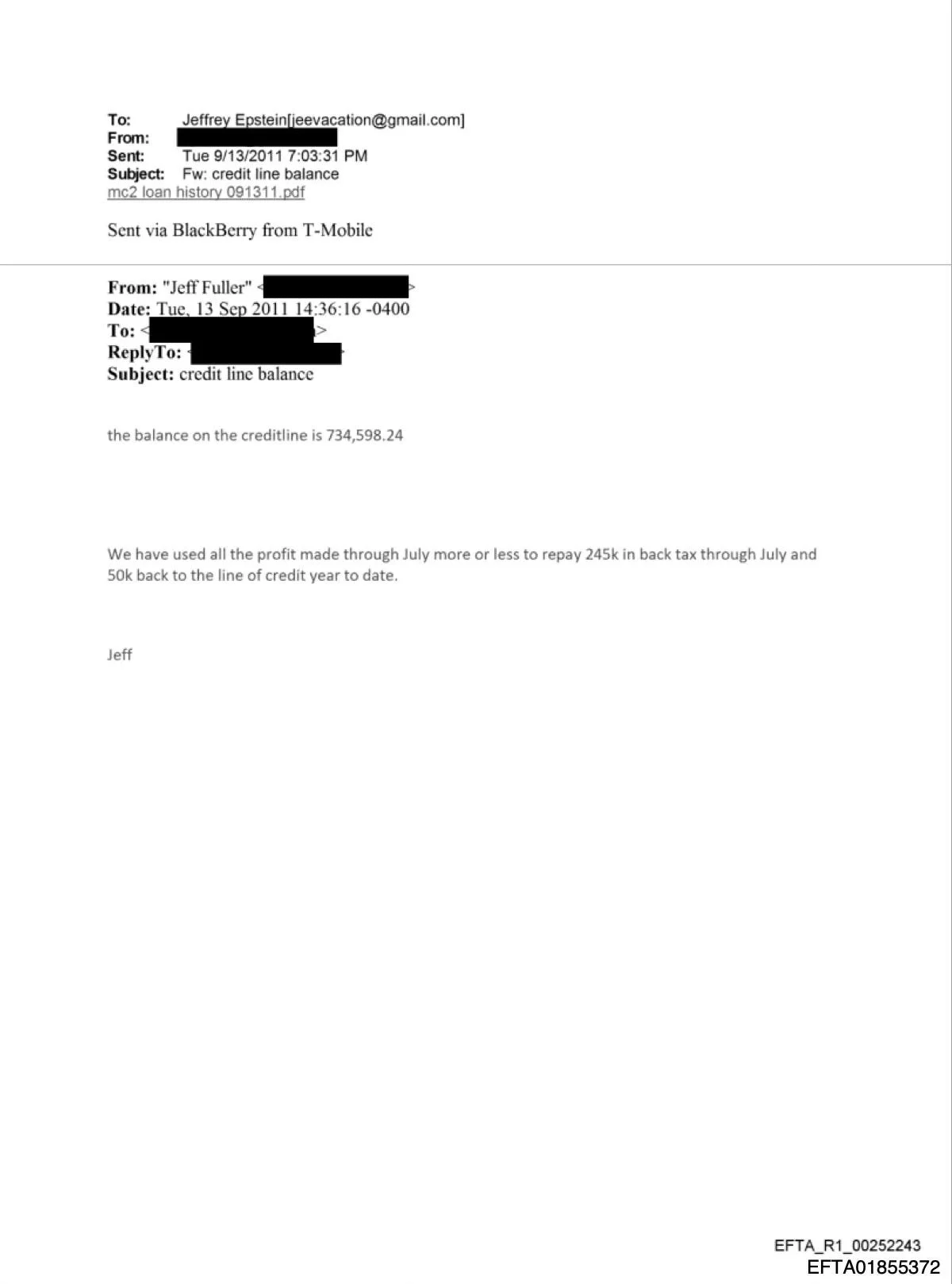
Internal email showing Epstein’s credit line balance exceeding $700,000.
This isn’t about fashion.
It’s not about modeling.
It’s about systems — systems that trained us early to be compliant, desirable, quiet, and grateful for attention.
And it’s about finally telling the truth about what they sold us.