Jack Smith Testifies Before the House Judiciary Committee
Former Special Counsel Jack Smith testifies publicly before the House Judiciary Committee
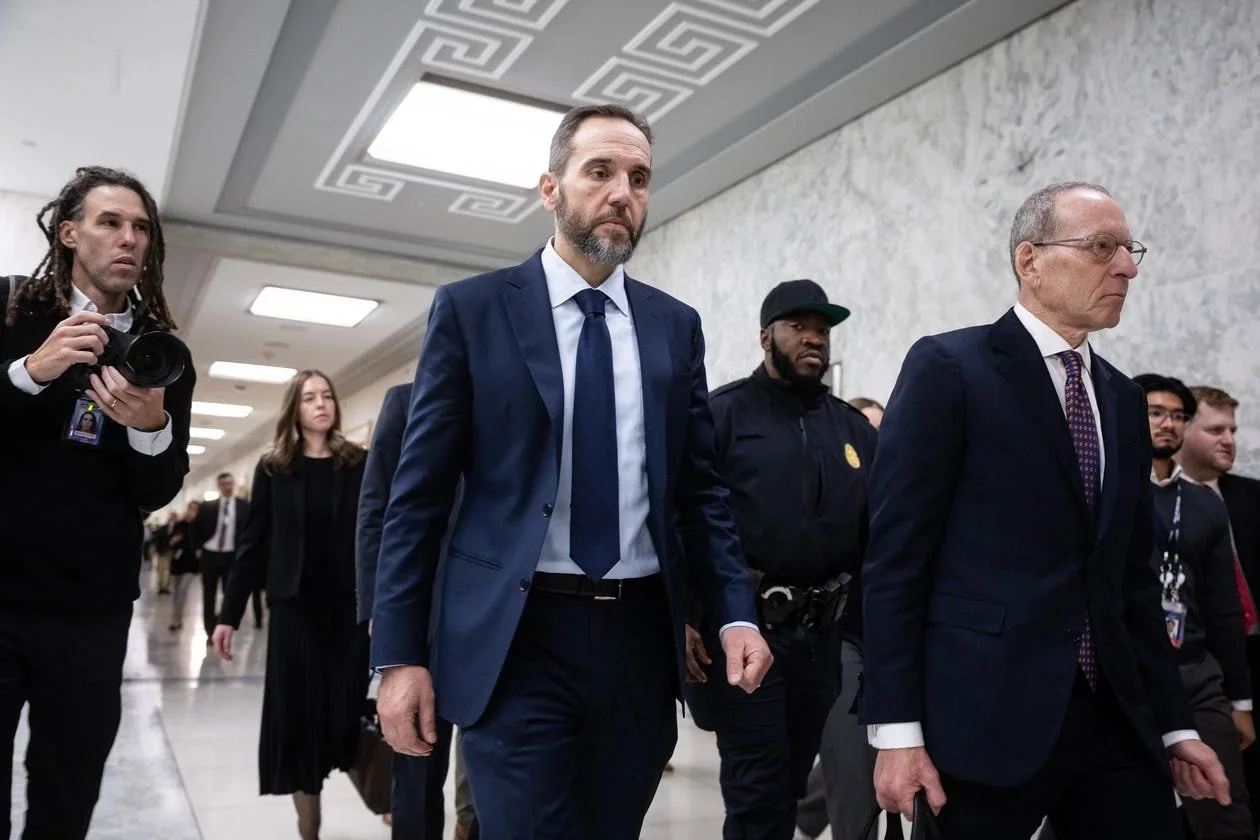
Photo: Francis Chung/POLITICO
Brief Timeline
On January 20th, 2025, newly inaugurated President Donald Trump pardoned all of the nearly 1,600 January 6th insurrectionists.
In November 2022, Merrick Garland appointed Jack Smith as an independent special counsel. He was tasked with overseeing two investigations already opened against Donald Trump: the Election case and the Classified Documents case.
In December 2025, Jack Smith testified in a closed-door deposition before the Judiciary Committee that he and his team “had proof beyond a reasonable doubt in both cases” that Donald Trump was guilty in both cases. On December 31st, 2025, a partially redacted transcript from the deposition was released.
Today, a gag order issued by Trump-appointed federal judge Aileen Cannon prevents Jack Smith from discussing the contents of his probe in the Classified Documents case (Volume II). Volume I was released to the public in January 2025.
Cases Against Donald Trump
Classified Documents Case: In 2023, Donald Trump was indicted on 37 counts of willfully retaining classified documents in a Mar-a-Lago bathroom and ballroom, as well as obstructing efforts to retrieve them. The charges include more than 30 counts of violating the Espionage Act.
In July 2024, Federal Judge Aileen Cannon, appointed by Donald Trump, dismissed the case, finding that the appointment of Special Counsel Jack Smith and the funding of his office violated the Constitution’s Appointments Clause.
The case was dismissed without prejudice, meaning that the government could, after Trump’s presidency, revive the case.
United States v. Donald Trump: This case is commonly referred to as the Elections Fraud case. The allegations against Donald Trump are that he conspired to overturn the 2020 election results, in part by knowingly spreading false claims of election fraud.
Count 1: 18 U.S.C. § 371 (Conspiracy to Defraud the United States)
Count 2: 18 U.S.C. § 1512 (Conspiracy to Obstruct an Official Proceeding)
Count 3: 18 U.S.C. §§ 1512 (Obstruction of and Attempt toObstruct an Official Proceeding)
Count 4: 18 U.S.C. § 241 (Conspiracy Against Rights)
January 22nd, 2026 | Committee Hearing
Jim Jordan: “It was always about politics.”
In his opening statement, Jim Jordan characterized the investigations into Donald Trump as politically motivated and repeated claims that the 2020 election was stolen, claims contradicted by extensive evidence and multiple judicial findings.
In contrast, Jamie Raskin opened by calling Donald Trump a criminal for his actions and praising Jack Smith for his work on the cases. Raskin noted that Smith was constrained by a judicial gag order issued by Judge Aileen Cannon, which limited Smith’s ability to speak fully about the Classified Documents case. Raskin described the order as emblematic of the broader obstacles facing the prosecution.
There was palpable tension in the room — between lawmakers and within the gallery itself. Four Capitol Police officers (Michael Fanone, Daniel Hodges, Aquilino Gonell, and Harry Dunn) were in attendance, as was far-right political operative Ivan Raiklin. During a recess, Raiklin, who has previously been accused of threatening Fanone’s family, instigated a confrontation with Fanone. The moment was visibly tense.
GOP lawmakers were aggressive in their questioning, frequently interrupting Smith, repeatedly attempting to undermine his credibility, and at least one representative referred to him as a “hypocrite.”
Throughout the hearing, Jack Smith was deliberate and measured in his responses, carefully avoiding the political theater on display.
Notable Testimony from Jack Smith
“I think [Trump’s] statements are meant to intimidate me. I will not be intimidated. I think these statements are also made as a warning to others: what will happen if they stand up? And, I am, as I say, I’m not going to be intimidated. We did our work pursuant to Department policy. We followed the facts, and we followed the law. And that process resulted in proof beyond a reasonable doubt that he committed serious crimes. I’m not going to pretend that didn’t happen because he’s threatening me.”
“Our investigation revealed that Donald Trump was not looking for honest answers about whether there was fraud in the election. He was looking for ways to stay in power. And when people told him things that conflicted with him staying in power, he rejected them, or he chose not even to contact people like that who would know if the election was done properly in the state? On the other hand, when individuals would say things that would allow him to stay in power, no matter how fantastical, he would latch on to those that pattern. Over time, we felt it was powerful evidence that he, in fact, knew that the fraud claims he was making were false.”
“The people who assaulted police officers and were convicted after trial, in my view, and I think in the view of the judges who sentenced them to prison, are dangerous to their community. Some of these people have already committed crimes against their communities again. And I think all of us, if we’re reasonable, know that there’s going to be more crimes committed by these people in the future. I do not understand why you would mass pardon people who assaulted police officers. I don’t get it, I never will.”
“During my time as the chief of Public Integrity, I investigated cases involving both Republicans and Democrats. The standard in all of those cases was the same: follow the facts and the law. It didn’t matter what party you were in; what mattered was the facts of the case. There were cases I brought against Democrats and cases I brought against Republicans. There were also cases that I investigated and did not bring against Democrats and Republicans. Party affiliation played no role in my investigations.”
Arguments from the GOP in reference to the legality of Smith’s investigations
First Amendment Argument: Many of the GOP members of the committee focused on the First Amendment. Despite the evidence, the GOP argues that Jack Smith violated Trump’s First Amendment rights. They further assert that Trump’s claims of a stolen election are protected under the First Amendment.
Smith testified that, “The First Amendment is something we took seriously in our investigation. […] Speech that is used to facilitate a crime, a fraud crime in particular, is not protected under the First Amendment. The Supreme Court precedent on that is clear. This is an issue that we litigated before the District Court, and the District Court ruled, as I just stated, that it is not, in fact, protected.”
Speech or Debate Clause: The GOP has accused Jack Smith of violating the Constitution’s Speech or Debate Clause, which protects lawmakers from legal proceedings related to their official duties, when call logs for some GOP senators were subpoenaed.
During the government shutdown in late 2025, the GOP included language in the provisional bill that allows them to file a lawsuit if federal law enforcement subpoenas their data without notifying them. Each violation carries the potential for $500,000 in damages.